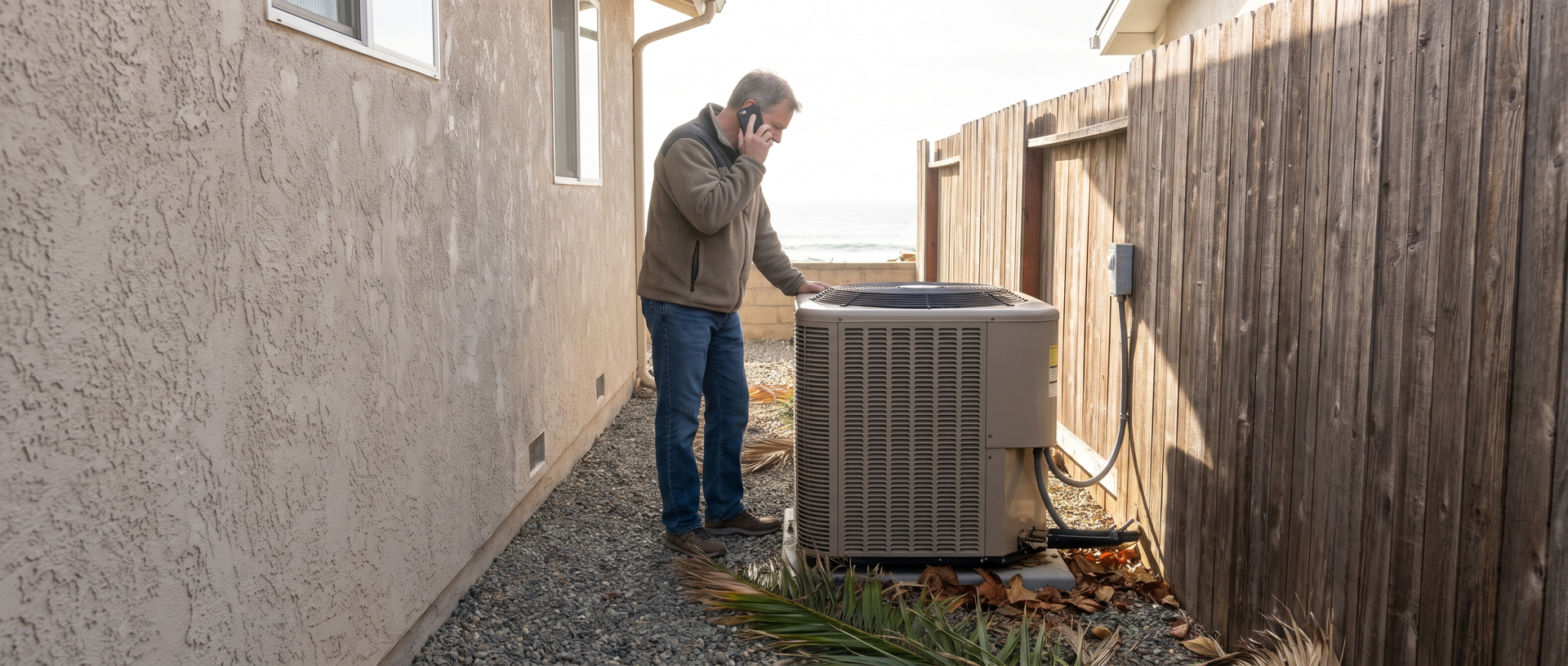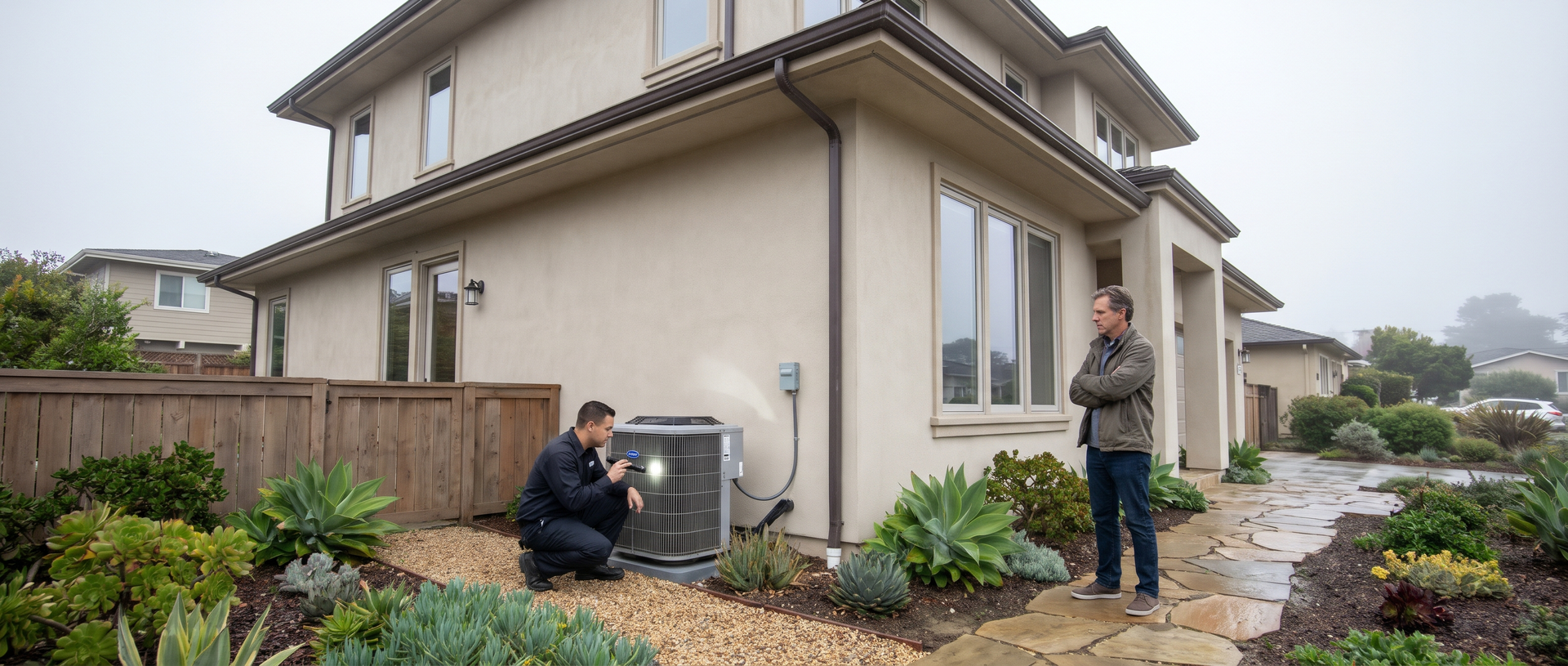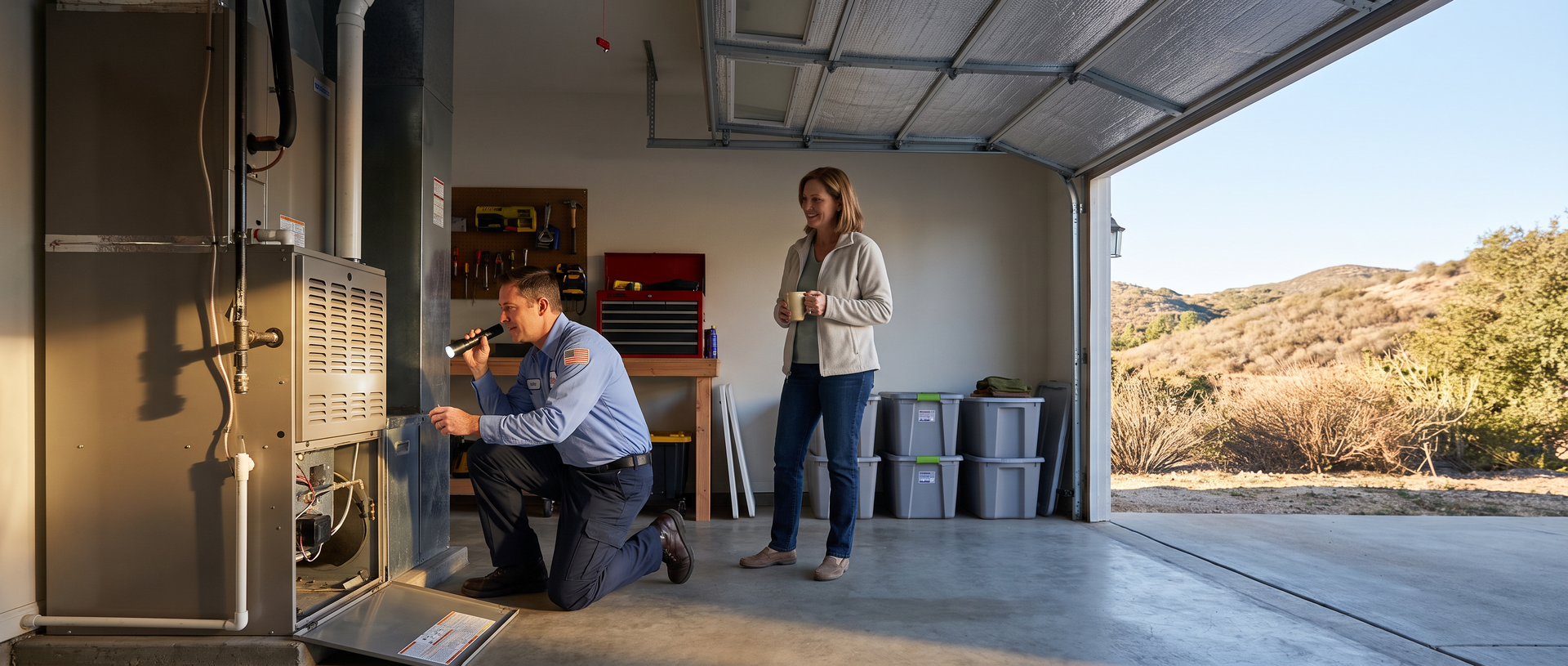

If your furnace trips the breaker the moment the heat turns on, it’s smart to pause before flipping it back again. That click at the panel is a safety device doing exactly what it was built to do.
In San Diego, many furnaces sit unused from spring until the first chilly evening, so startup is when hidden issues tend to surface. This guide covers what’s safe to check, when to stop, and how to get dependable heat back without guesswork.
First, Figure Out Which Kind of Trip You Have
Not every tripped breaker tells the same story. Most homeowners land in one of three situations, and knowing yours makes the next step much clearer.
- The one-time surprise. You turned on the heat for the first time this season, the breaker tripped once, and after a single reset everything ran normally.
- The repeat tripper. You might be someone who has already reset the breaker two or three times, and it snaps off again every time the heat calls.
- The warning-sign household. The trip came with a burning odor, buzzing, flickering lights, or a system that has been acting up for a while.
All three show up every fall, from coastal homes in Chula Vista and Oceanside to inland neighborhoods in Escondido where nights run cooler. If you’d like to see the full range of work a technician can help with, our heating and cooling services page lays it out.
Why this matters: the right move after a one-time trip is very different from the right move after a repeat one.
Matching Your Situation to a Safe Next Step
Here’s the thing. A breaker cuts power when something draws more current than the circuit should carry. Resetting it again and again doesn’t fix the cause; it just asks the same weak point to fail one more time.
| If This Sounds Like You | Consider This | Why It Fits |
|---|---|---|
| Tripped once, reset held, heat runs normally | Keep an eye on it and schedule a seasonal tune-up | Confirms nothing is wearing out before the cold stretch |
| Trips again right after a reset | Leave the breaker off and call a professional | Repeated resets can stress wiring and components |
| Trip came with burning smells, buzzing, or scorch marks | Shut the system off and request service promptly | Electrical warning signs need inspection, not trial and error |
| Trips only when other large appliances are running | Ask a technician to review the furnace circuit | Circuit questions are best answered with proper testing |
Before calling, a few simple checks are reasonable for most homeowners:
- Set the thermostat to Off so the furnace isn’t calling for heat.
- At the electrical panel, push the tripped breaker fully to off, then back to on, one time only.
- Confirm the furnace service switch near the unit (it looks like a light switch) is on.
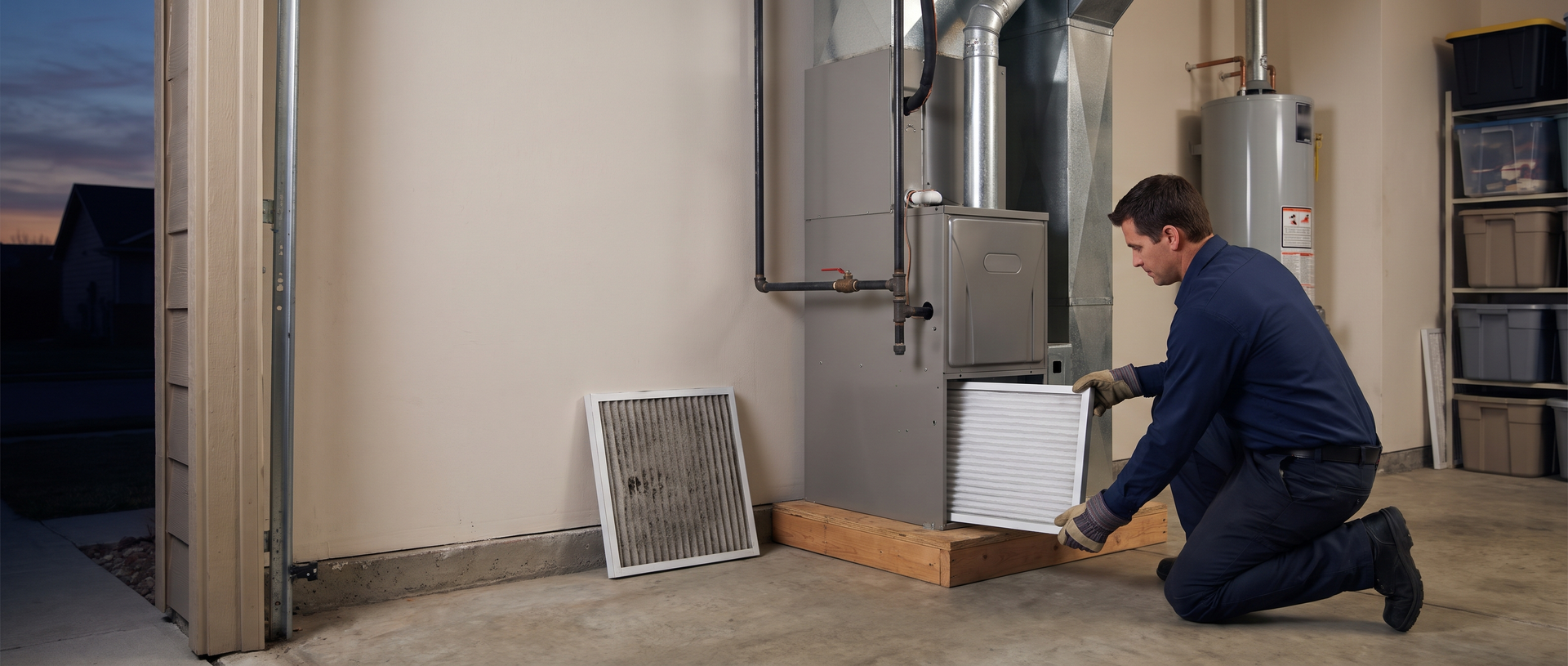
- If it’s easy to reach, check the air filter and replace it if it looks clogged.
- Turn the heat back on and watch. If the breaker trips again, leave it off.
When to stop and call a professional: If the breaker trips a second time, leave it off. Don’t remove furnace panels, handle wiring, or hold a breaker in the on position. If you ever smell gas, leave your home right away and call your gas utility or 911 from outside.
Sunline Heating & Air is a local, family HVAC company that helps homeowners across San Diego County sort out exactly this kind of startup problem.
Why a Furnace Trips the Breaker After Months of Rest
Our heating seasons are short and mild, which sounds like good news. The catch is that a furnace tucked into a garage, attic, or hall closet may sit idle for most of the year, collecting dust and quietly aging.
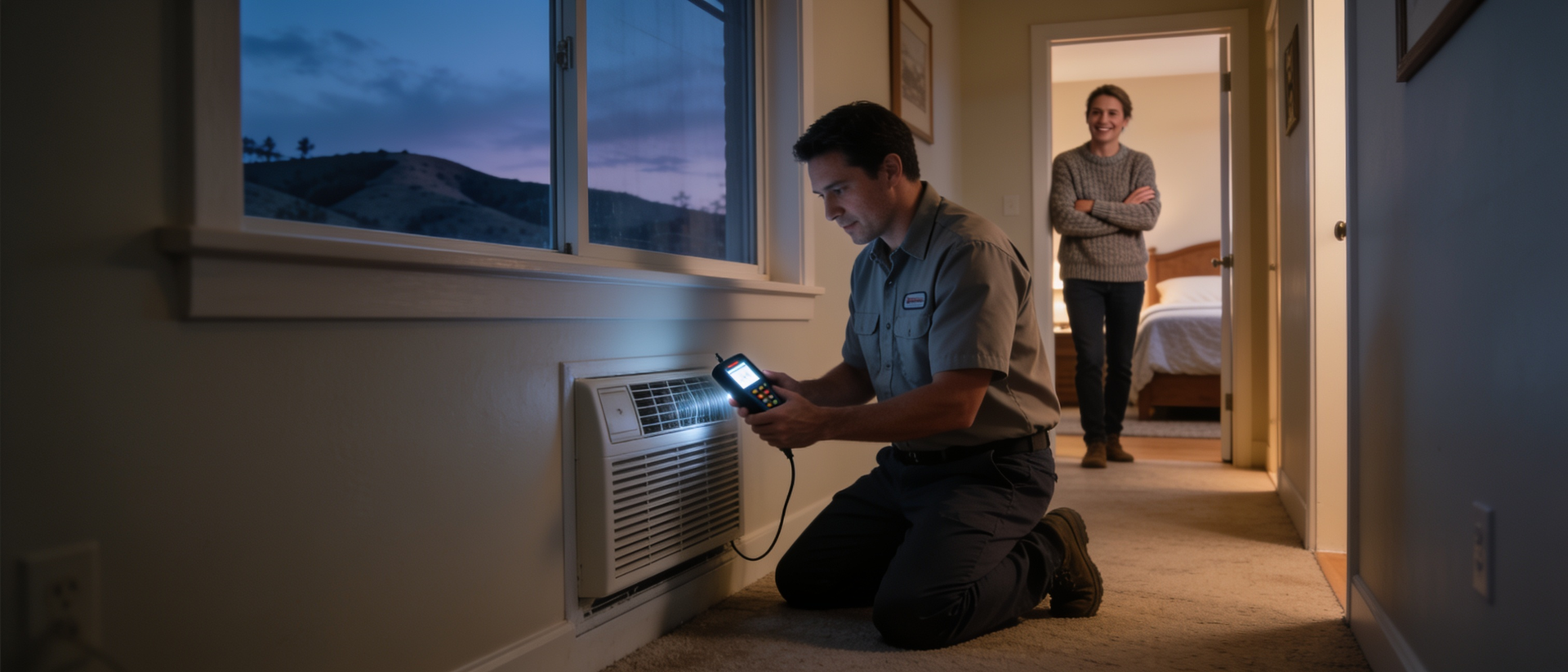
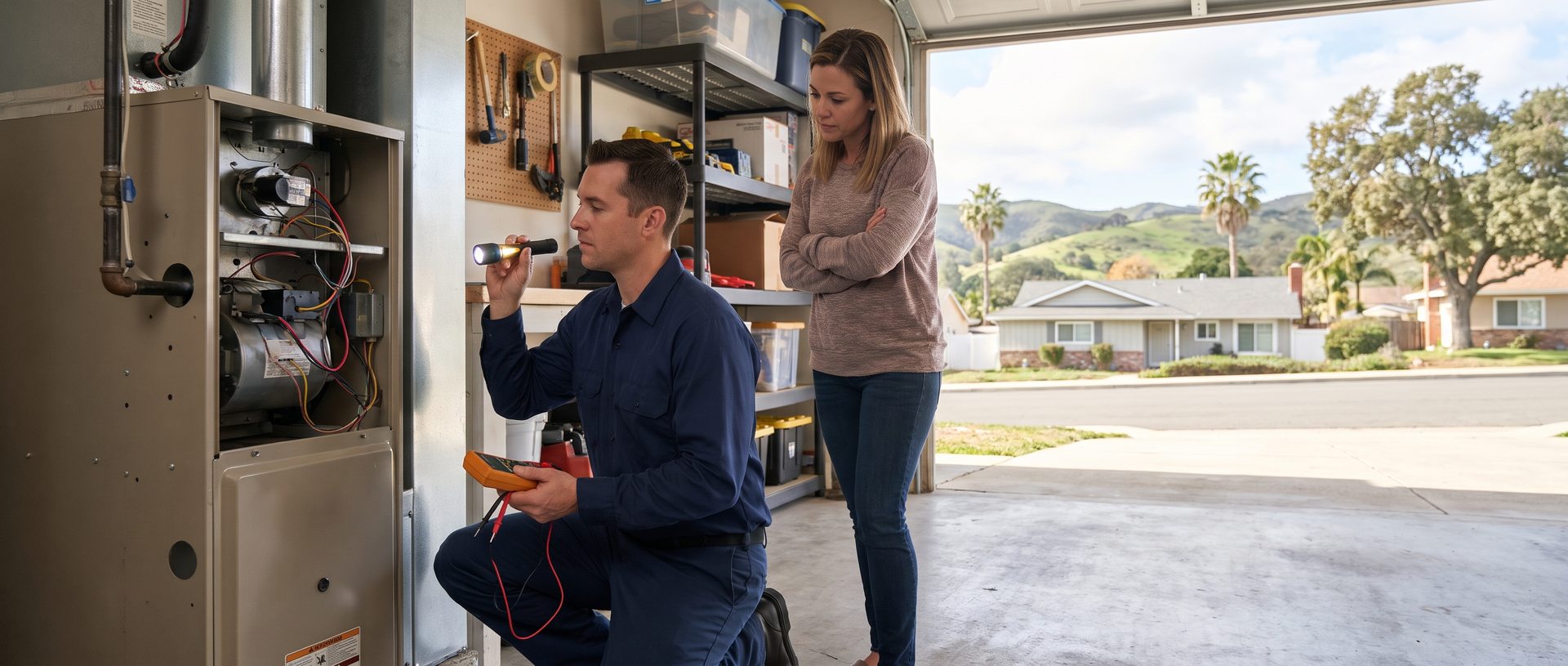
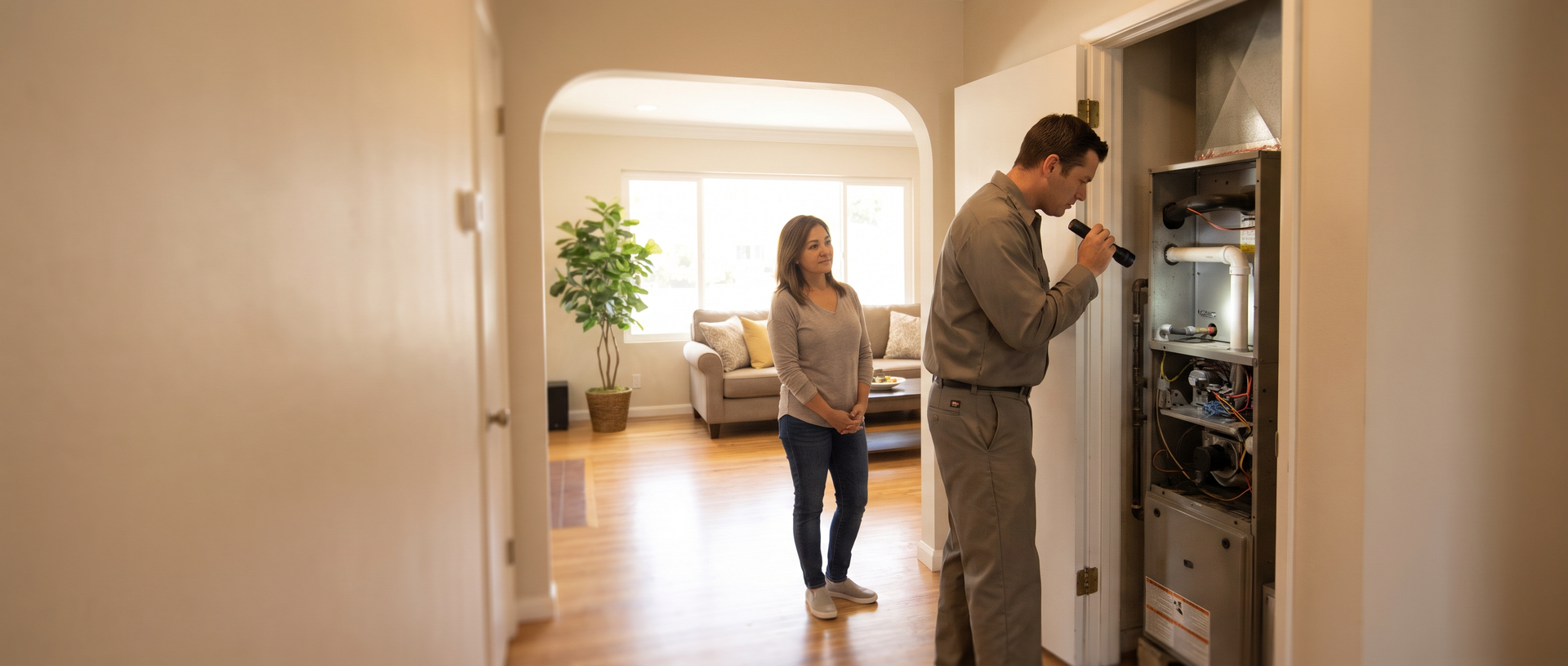
Nobody can say exactly what’s wrong without an inspection. Still, technicians commonly look at a few areas when a heater trips a circuit at startup:
- Blower motor and capacitor: a motor that struggles to start can pull more current than it should.
- Wiring connections: heat cycles, vibration, and coastal moisture can loosen or corrode terminals over time.
- Electric backup heat: homes with heat pumps may rely on electric heat strips that draw heavy current on cool mornings.
- Pests and debris: rodents in garages and attics sometimes damage wire insulation.
- The breaker itself: a breaker that has tripped many times over the years can wear out.
A faint dusty smell in the first few minutes of the season is common as dust burns off. A sharp electrical or plastic smell is different, and it’s a reason to shut the system down.
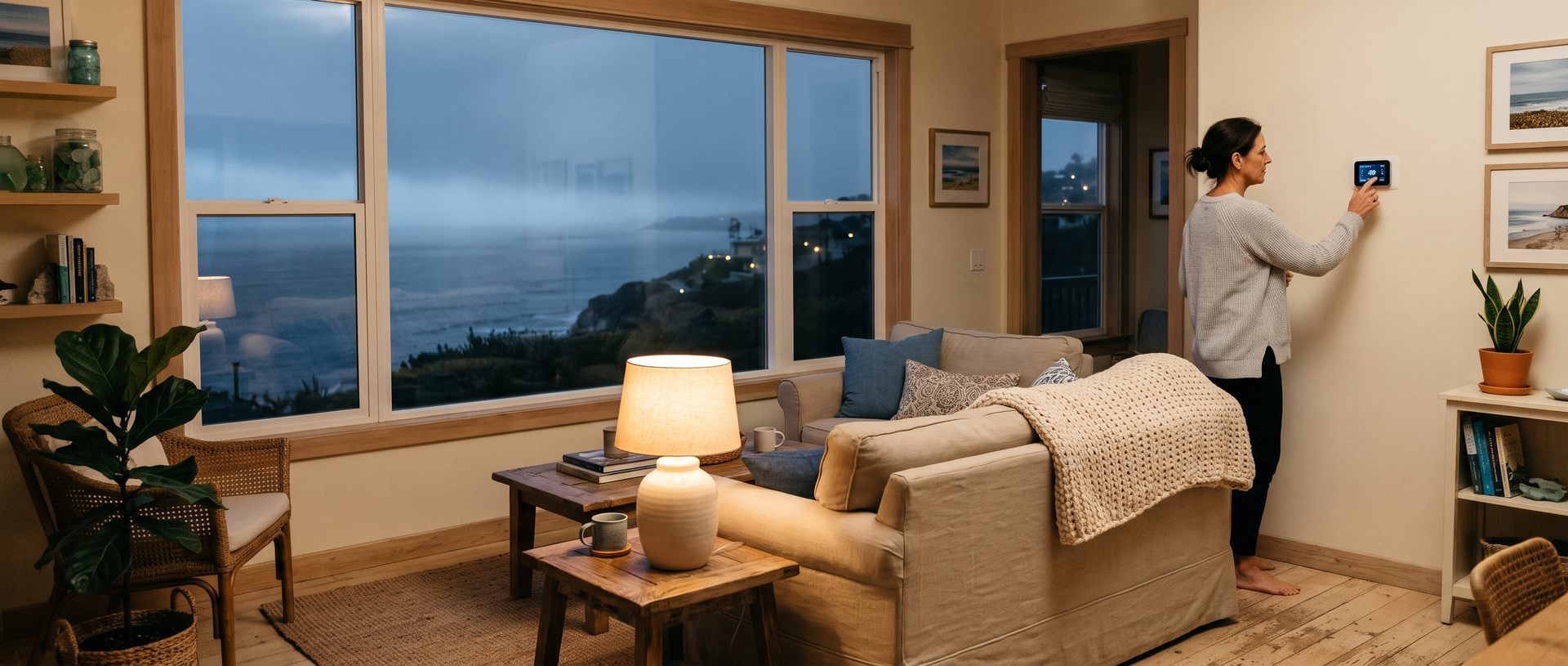
Picture it: you get home after a long drive up I-15, the evening is the first truly cool one, you tap the thermostat, and the garage goes dark. Frustrating? Absolutely. But it’s also useful information.
This helps homeowners who want to understand the problem without poking at live electrical parts.
Repair, Replace, or Maintain? Planning Past This Winter
Look, a tripped breaker doesn’t automatically mean you need a new furnace. Many causes come down to individual components that can be repaired.
What matters is the full picture: the system’s age and condition, its repair history, how evenly it heats your home, and whether small problems are starting to stack up.
- This week: get the cause identified so you’re not resetting the breaker every evening.
- This winter: run your heat with confidence, knowing the electrical side has been checked.
- Next fall: schedule routine maintenance before the first cool night so startup is a non-event.
If your system is older and repairs keep adding up, an honest conversation about replacement options makes sense. You can learn more about how we work on our About Sunline Heating & Air page.
This matters for homeowners who want a clear plan instead of a recurring winter headache.
Common Questions About a Furnace That Trips the Breaker in San Diego
Is it safe to reset the breaker if my furnace trips it?
Resetting once is generally reasonable if there’s no burning smell, buzzing, or visible damage. If the breaker trips again, leave it off and call a qualified HVAC technician. Repeated resets can stress wiring and components, and the problem often returns at the next startup.
Why does my furnace trip the breaker only when the heat first turns on?
Startup asks the most of motors and electrical parts, so weak components often reveal themselves then. A struggling blower motor, worn capacitor, or loose connection are common things a technician checks. After months idle in a San Diego garage or attic, these issues often surface on the first cool night.
Can a dirty furnace filter cause the breaker to trip?
A badly clogged filter can make the blower work harder and contribute to overheating, though it’s rarely the only cause of a tripped breaker. Replacing it is a simple first step. If the breaker still trips with a clean filter, schedule a professional inspection to find the underlying issue.
When should I call for furnace repair instead of troubleshooting myself?
Call a professional if the breaker trips more than once, or if you notice burning smells, buzzing, scorch marks, or flickering lights. Electrical and gas components need trained hands. A local HVAC technician can safely test the circuit, motor, and controls, then explain your options clearly.
Steady, Reliable Heat Starts With One Smart Decision
When your furnace trips the breaker, the safest approach is simple: one reset at most, then let a professional find the cause. A one-time hiccup gets confirmed with a tune-up. A repeat problem becomes a clear plan instead of a frustrating evening.
Either way, you get back to quiet, dependable warmth. Reach out to our team with questions, or book your heating service online whenever you’re ready.
Let’s Get Your Heat Back on Track
Talk with Sunline Heating & Air about safe, dependable furnace and heating service in San Diego County.