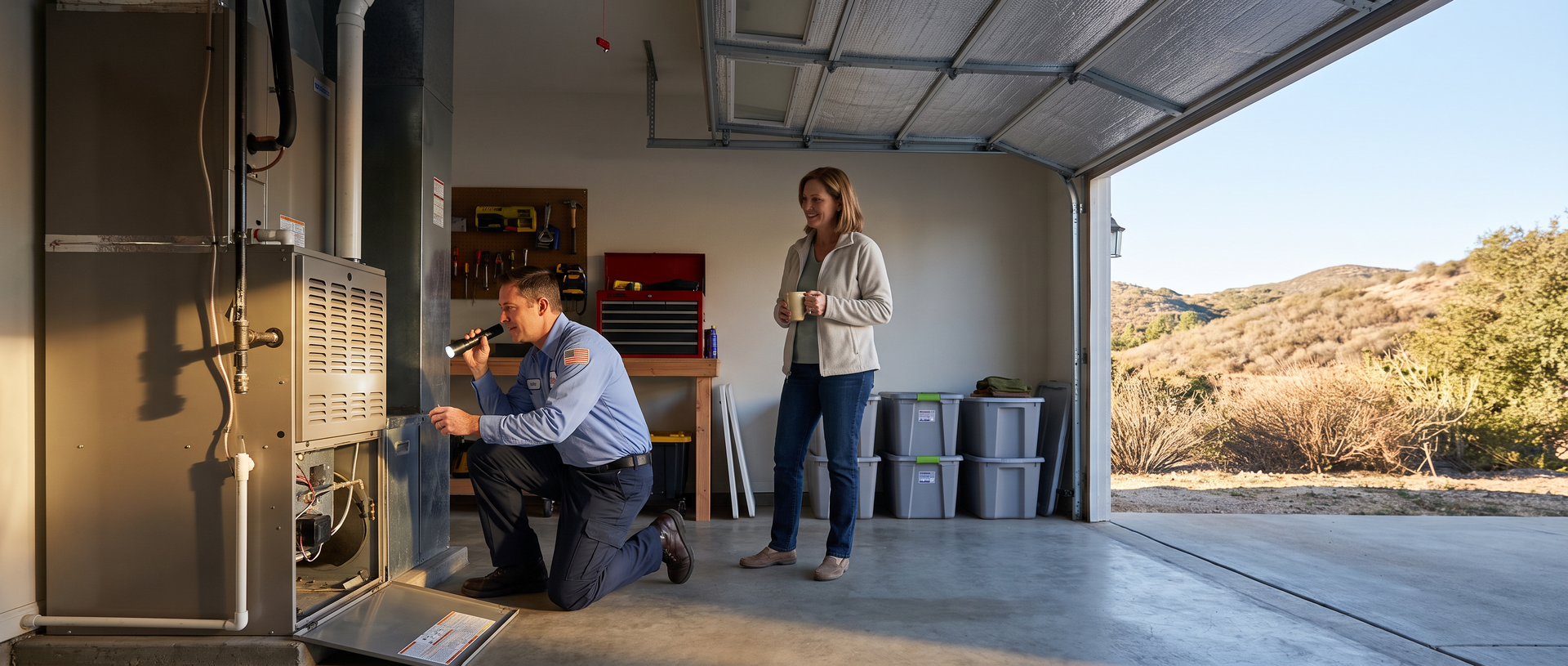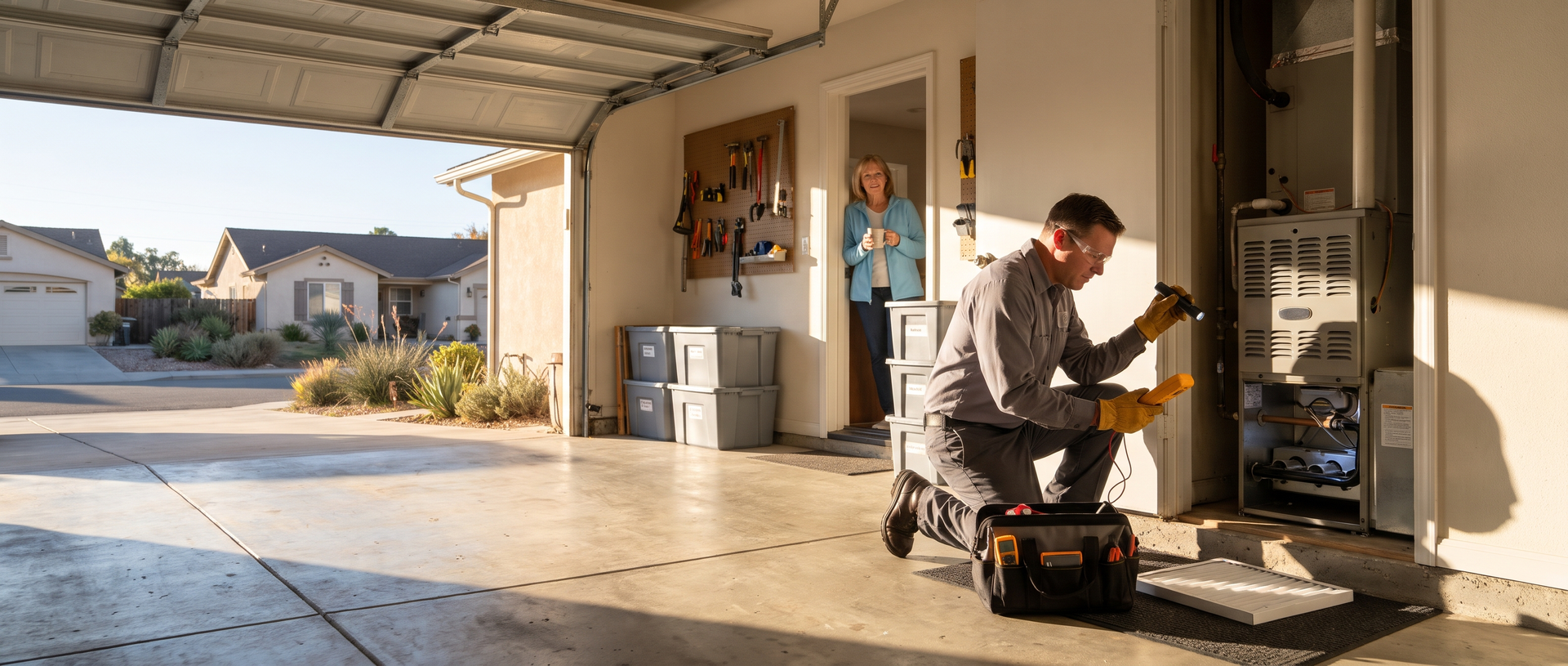

Pacific Beach heating maintenance is easy to forget when most afternoons feel like summer. Then the sun drops behind the water, the marine layer settles over Mission Bay, and the living room turns damp and chilly in a hurry.
That first cold evening is usually when a heater that sat idle for months gets tested. This guide covers what seasonal care looks like near the coast, what to watch for, and when a professional visit makes sense.
Three Kinds of Beach-Area Heating Owners
Not every home near the sand uses heat the same way, so maintenance needs differ too. You might recognize yourself in one of these:
- The evening-only user. You might be someone who runs the heater for an hour or two after sunset and forgets about it by noon. Light use still lets dust, moisture, and worn parts build up quietly.
- The rental or second-home owner. You might own a cottage or condo that sits empty between guests or tenants. You want heat that works on the first try, without a call from someone who's cold.
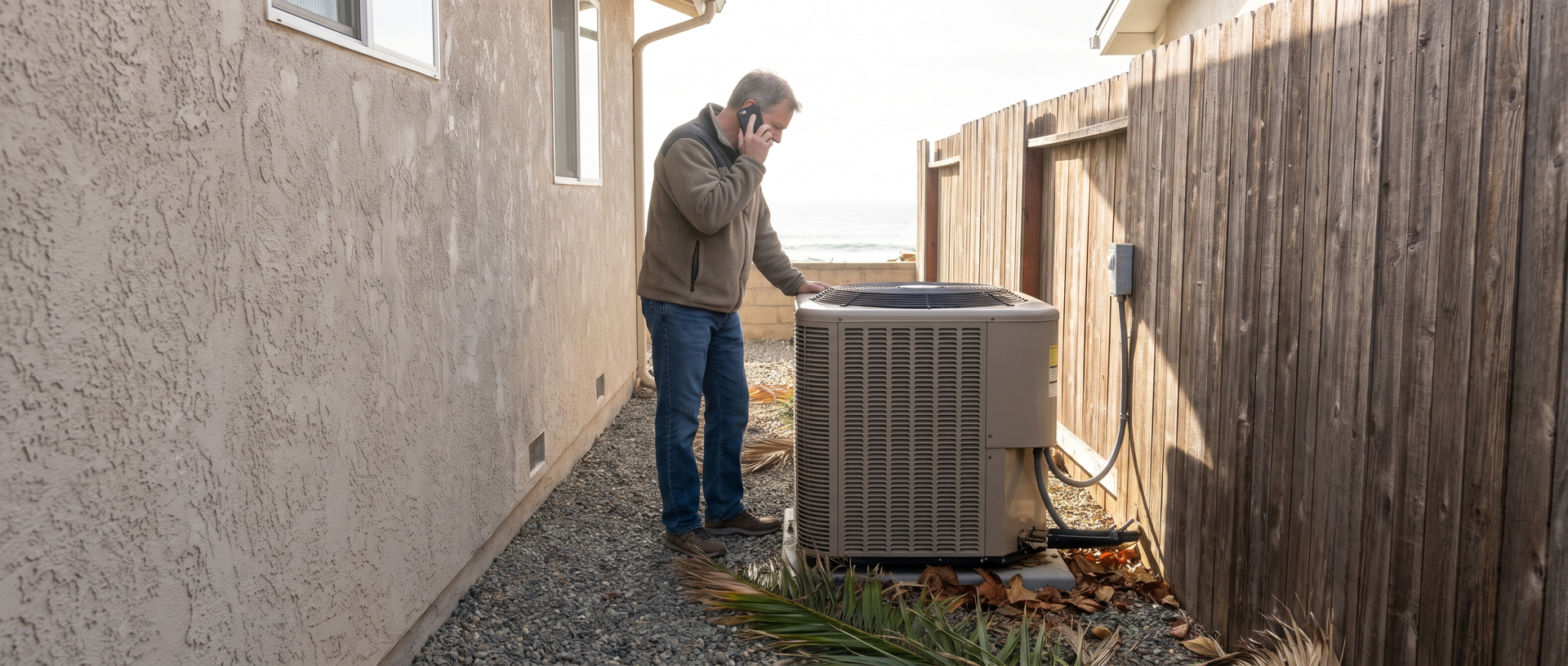
- The heat pump household. You might rely on one outdoor unit for summer cooling and winter warmth. That system works year-round, and it sits in salty air the whole time.
Coastal owners in Oceanside tend to share these patterns. Families in Escondido, farther inland, often run their heat longer each night, and many Chula Vista neighborhoods fall somewhere in between. Our heating and cooling services cover furnaces, heat pumps, and ductless systems across the county.
This matters for owners who use heat lightly and assume light use means low risk.
Matching Pacific Beach Heating Maintenance to Your System
Here's the thing: a heating tune-up isn't one-size-fits-all. What a technician focuses on depends on the type of equipment warming your home.
| If Your Home Has | Maintenance Focus | Why It Fits |
|---|---|---|
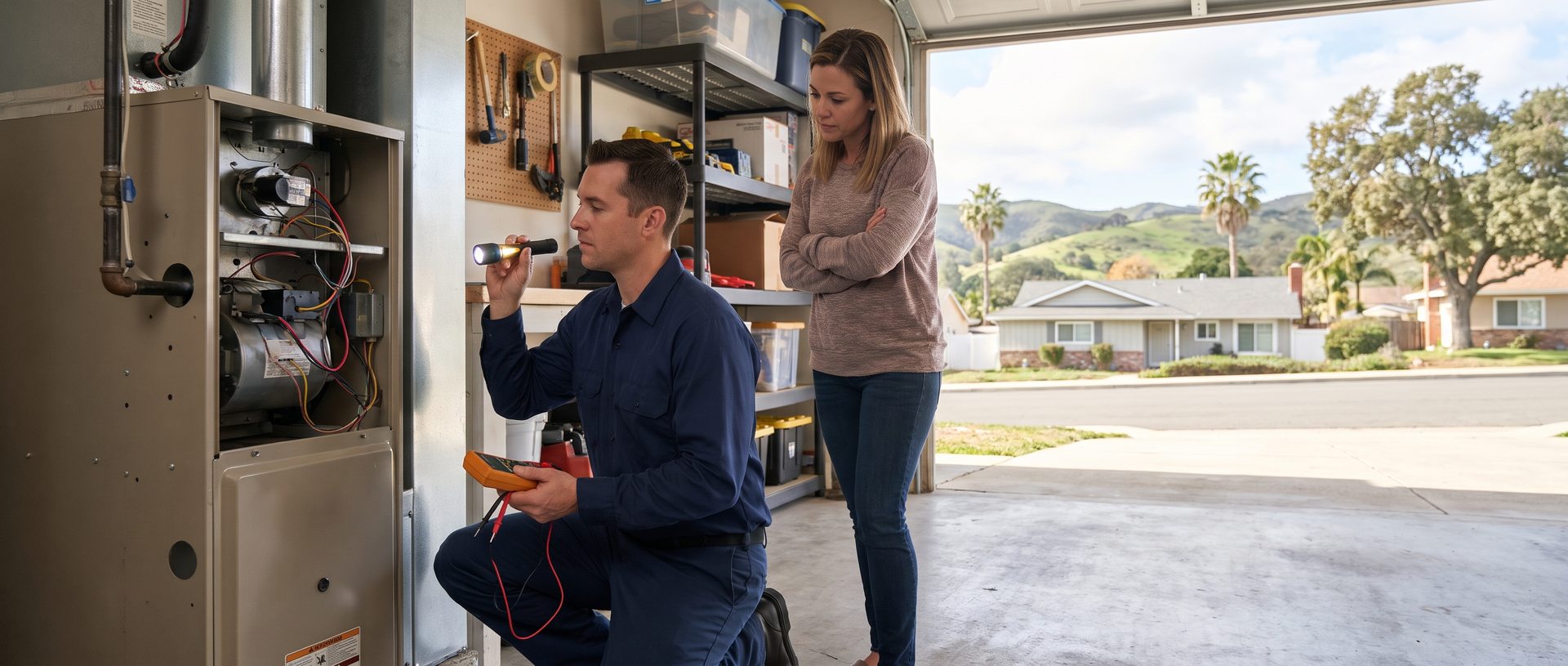
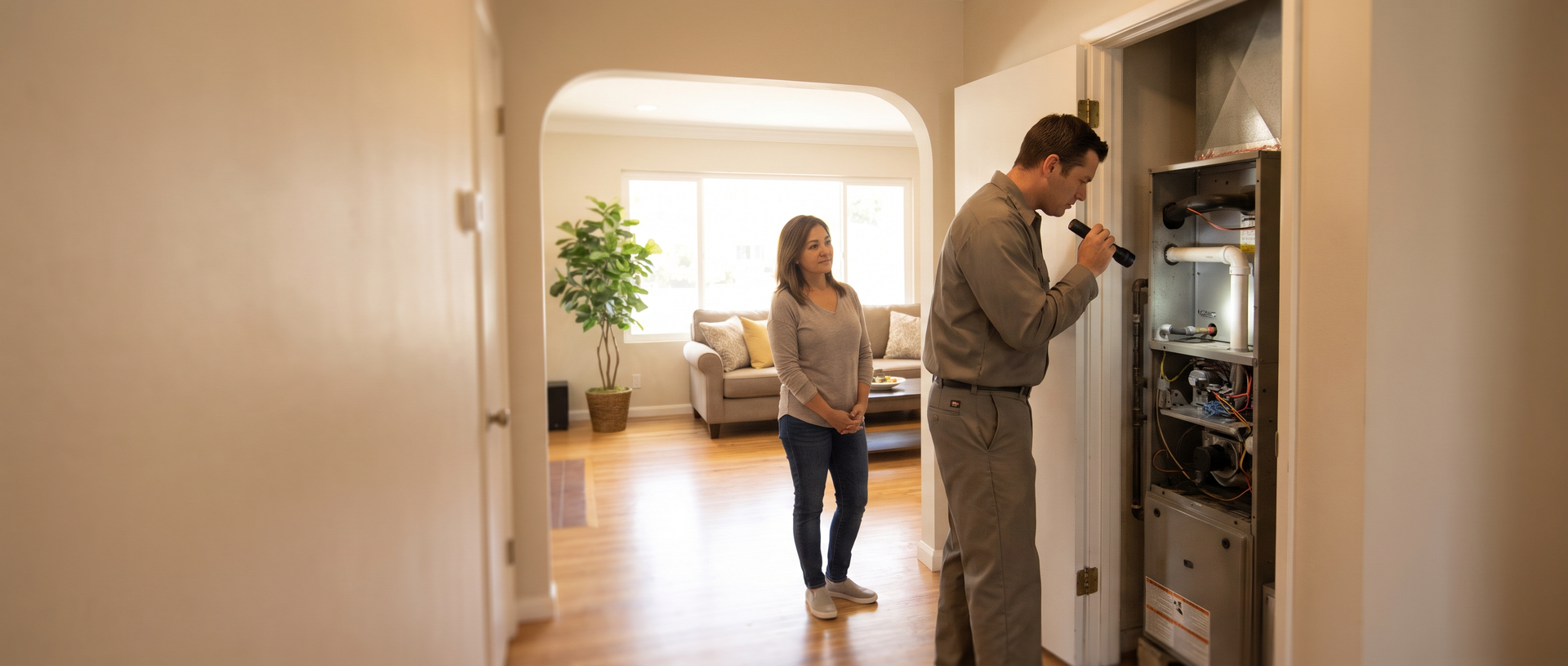
| A gas furnace in a closet, garage, or attic | Burners, flame sensor, venting, filter, and safety controls | A clean, safe startup when the fog rolls in |
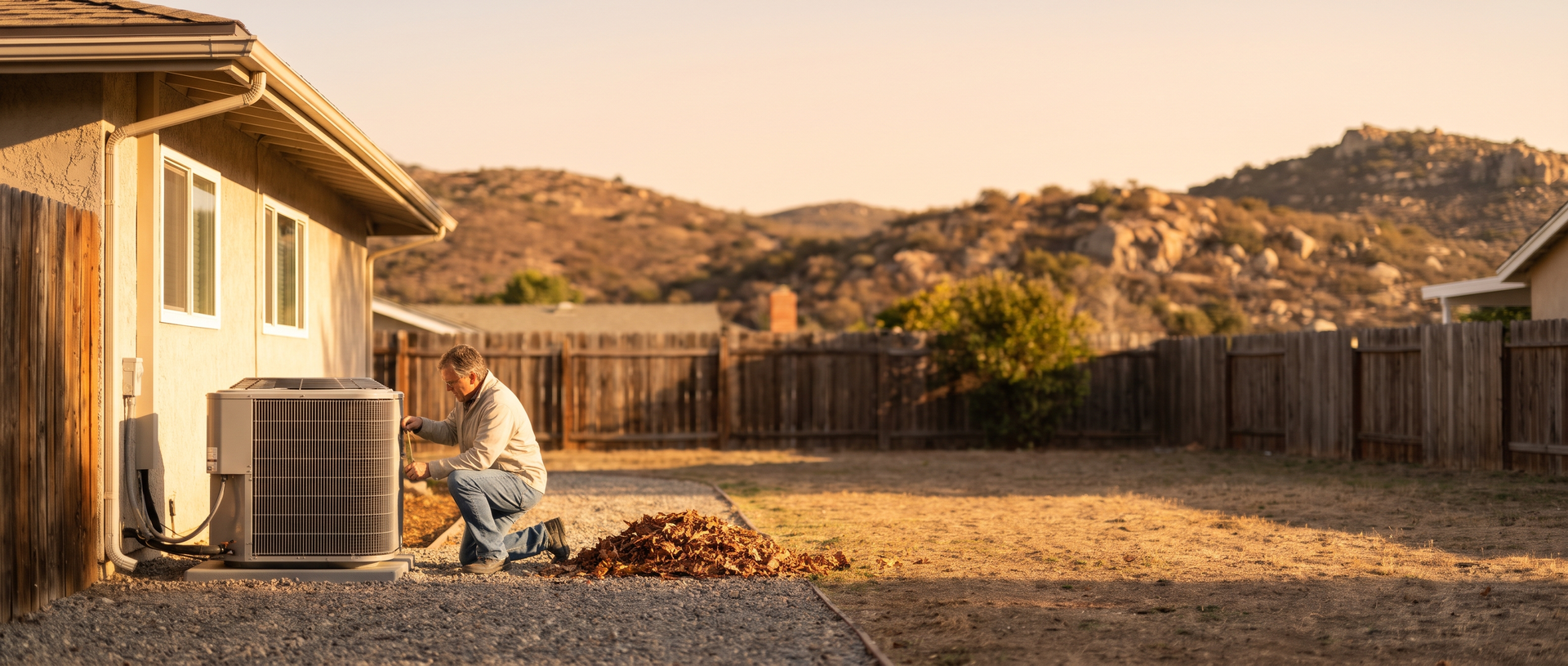
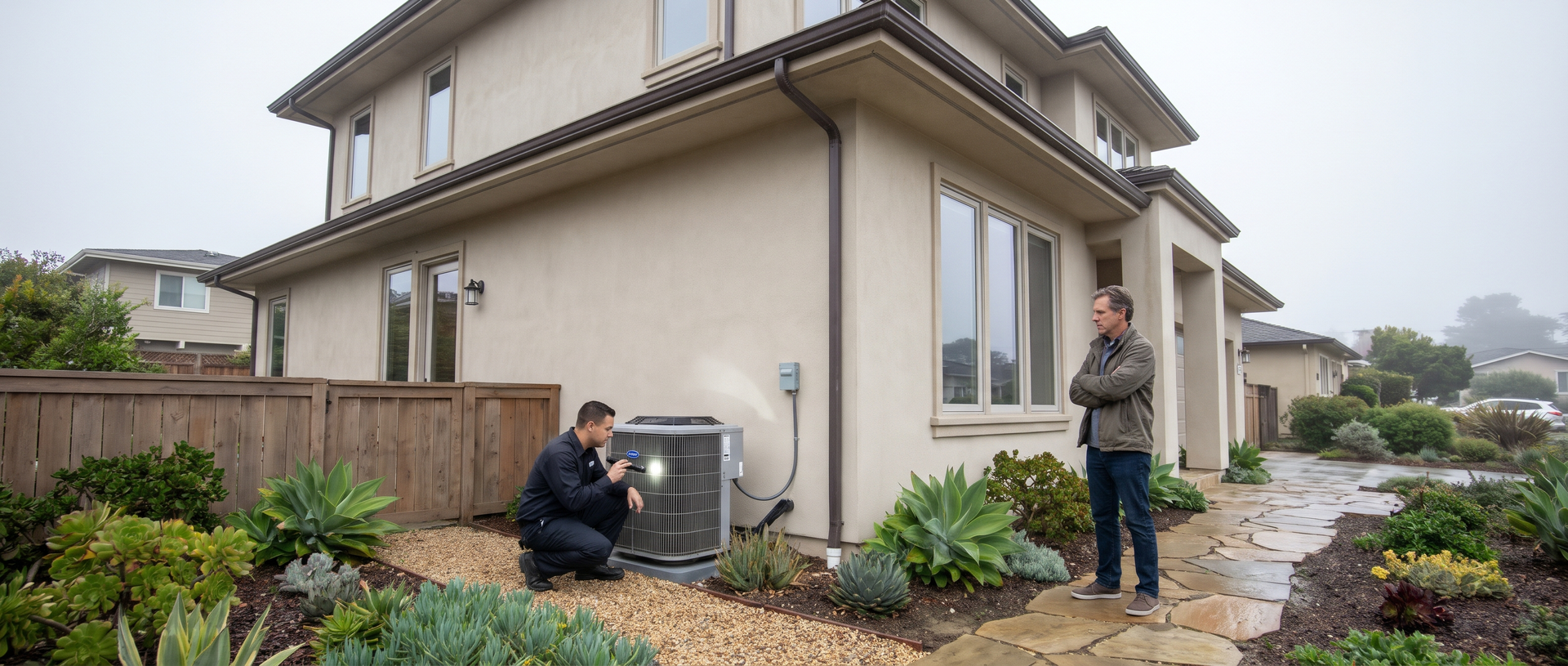
| A heat pump with an outdoor unit | Coil condition, corrosion, electrical connections, and defrost operation | Dependable heating and cooling from one system |
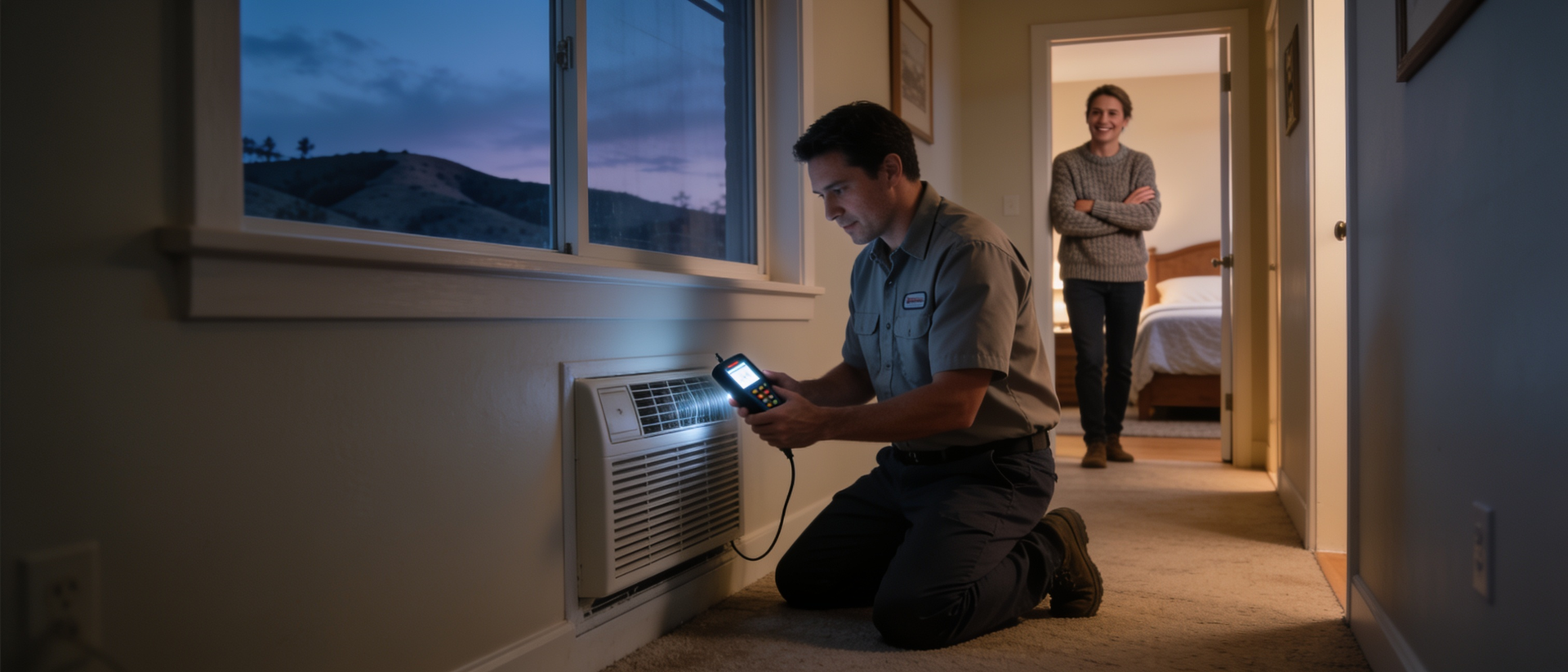
| An older wall or floor furnace | Venting, gas connections, clearances, and controls | Peace of mind in compact beach cottages |
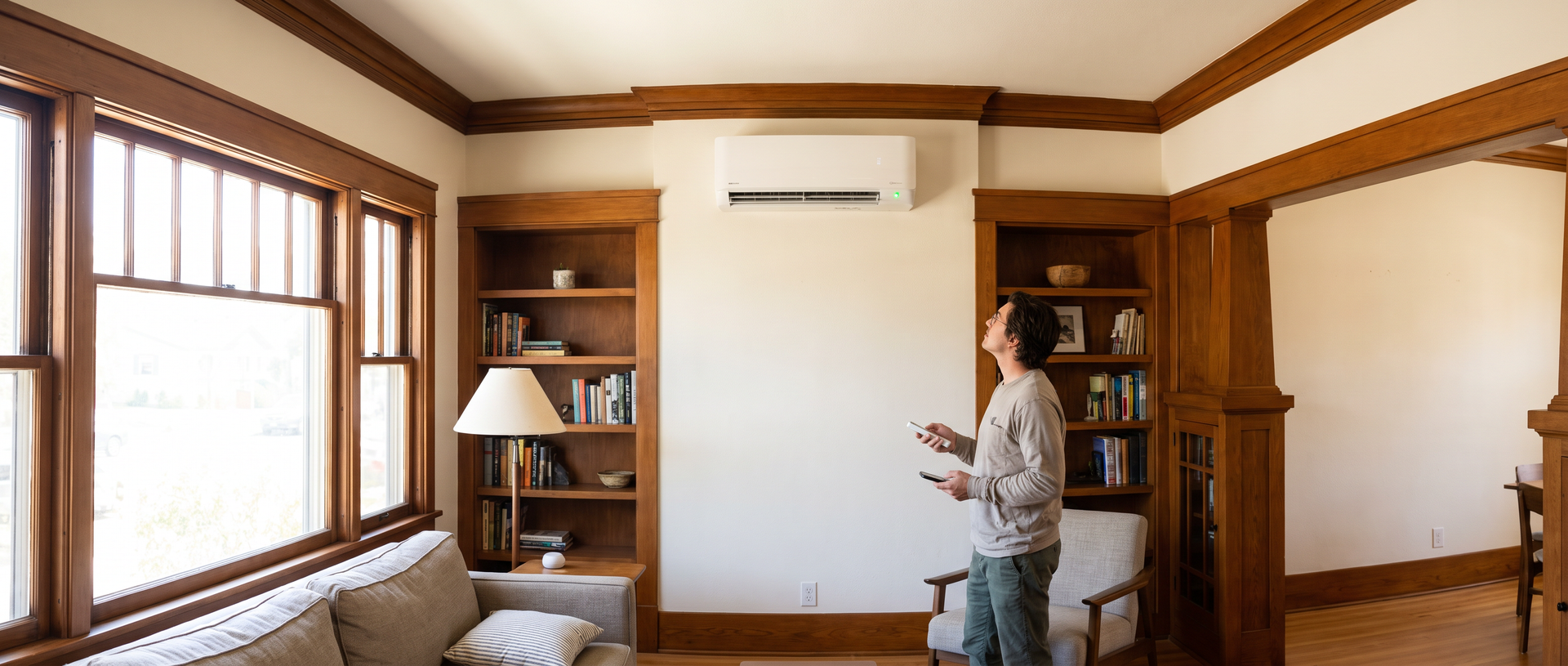
| A ductless mini-split | Filters, indoor unit cleaning, and outdoor unit inspection | Steady, room-by-room comfort |
Not sure which system you have? That's completely normal. A technician can identify it during the visit and explain what it needs in plain terms. When you're ready, you can book a heating maintenance visit online.
Key takeaway: Coastal heaters often run lightly but live in tough conditions. A fall checkup helps keep that first cold-night startup safe and predictable.
What Ocean Air Does to an Idle Heater
Picture a Sunday evening in late November. You walk back from Crystal Pier as the breeze turns cold, switch on the thermostat, and catch a burning-dust smell from the vents.
A brief dusty smell is common after months of downtime. A strong or lingering odor, any smell of gas, or a heater that keeps shutting off is a reason to stop and call a professional.
Coastal homes add a few wrinkles of their own. Humid, salty air can wear on outdoor coils and electrical connections over time. Moisture can also affect ductwork in attics and crawlspaces, and sand and grit can load up filters.
Is a maintenance visit exciting? No. But catching a weak igniter or a corroded connection in the fall is far easier than discovering it on a cold, foggy night.
This matters for homeowners near the water whose equipment sits in damp air all year.
Safety first: Gas furnaces, electrical components, venting, and refrigerant should only be serviced by a qualified HVAC professional. Keep working carbon monoxide alarms in your home, and if you ever smell gas, leave immediately and contact your gas utility from outside.
How Heating Care Pays Off Over the Years
Maintenance works best as a pattern, not a one-time event. Here's how it tends to unfold:
- The first visit. A technician inspects, cleans, and tests the system, then walks you through what they found. You get a clear picture of your equipment's age and condition.
- The first winter. Heat comes on when the evenings cool down. You stop wondering whether it will.
- Year three and beyond. Seasonal records make gradual wear easier to spot. If repairs start adding up, you'll have the history to weigh repair against replacement calmly instead of in a rush.
Older systems may also use controls that don't pair well with newer smart thermostats. That's worth asking about during a visit, especially if you're planning upgrades. You can learn more about our family HVAC team and our approach to honest recommendations.
This benefits homeowners who prefer steady, predictable comfort over emergency decisions.
Common Questions About Pacific Beach Heating Maintenance
How often should I schedule heating maintenance in Pacific Beach?
Most homeowners benefit from a heating checkup once a year, ideally in early fall before the first cool, foggy evenings arrive. Near the coast, an annual visit also gives a technician the chance to spot moisture or salt-air wear on equipment before it turns into a midwinter service call.
Is a burning smell normal when I first turn on my heater in Pacific Beach?
A faint dusty smell at first startup is common, because dust settles on heating parts during the warm months. If the odor is strong or lingers, or you see smoke, shut the system off and call a professional. If you smell gas, leave immediately and call your gas utility from outside.
Does salt air affect heat pumps and outdoor HVAC units near Pacific Beach?
It can. Salty, humid coastal air may speed up corrosion on outdoor coils, fasteners, and electrical connections over time. Keeping the unit clear of debris and overgrown plants helps, but a technician should inspect the coil and wiring, since corrosion isn't always visible from the outside.
Can I handle Pacific Beach heating maintenance myself?
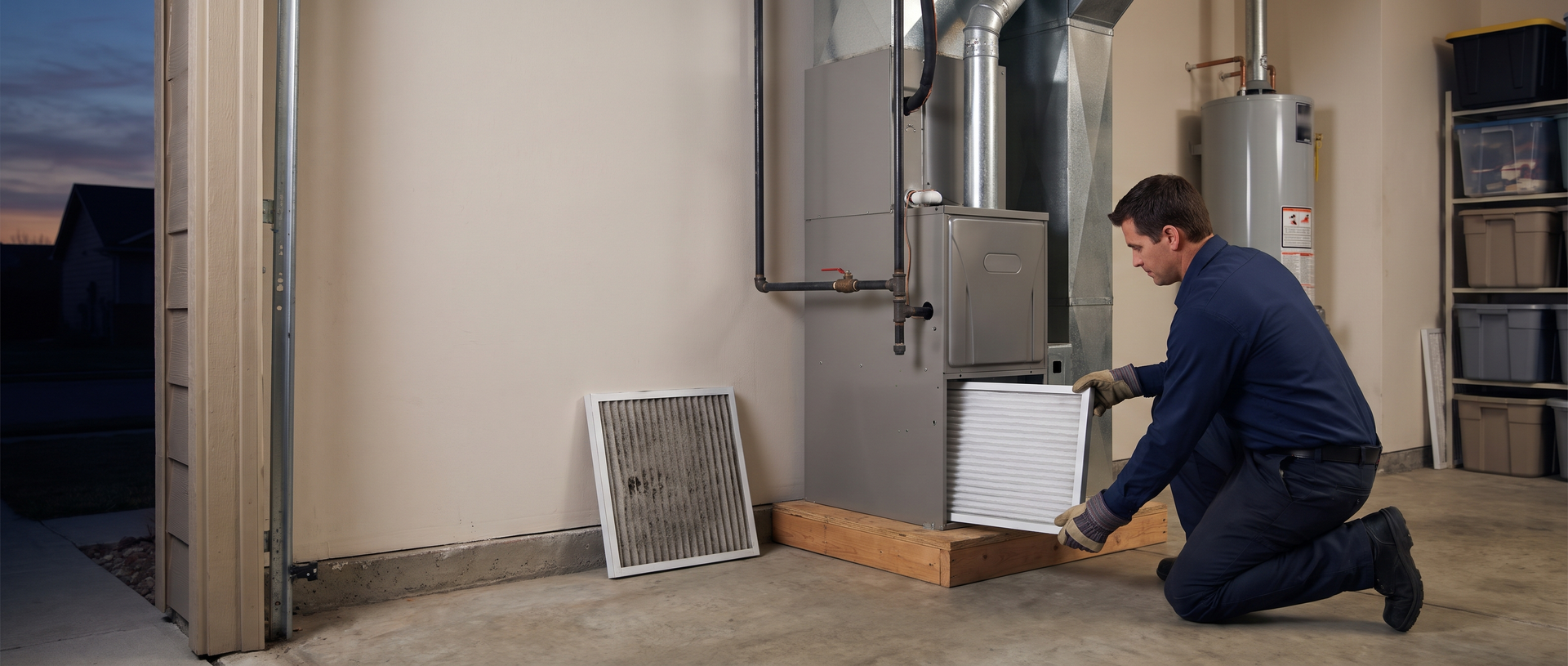
Some of it. Homeowners can replace filters, keep vents and returns unblocked, test carbon monoxide alarms, and clear space around equipment. Gas connections, burners, electrical parts, venting, and refrigerant work should be inspected and serviced by a qualified HVAC professional for safety and proper operation.
Feeling Ready for Cool Coastal Nights
Good Pacific Beach heating maintenance turns the marine layer into part of a cozy evening instead of a problem to solve. If your heater has sat idle since spring, then a fall checkup is a simple way to make the next cold night uneventful.
Explore more about Sunline Heating & Air, or reach out to our team with questions about your system. We're glad to help you head into winter feeling comfortable and confident.
Stay Comfortable When the Fog Rolls In
Talk with Sunline Heating & Air about dependable heating maintenance for your coastal San Diego County home.