
Coronado heat pump repair questions tend to show up on the first chilly evening of the season. The AC worked great all summer, but now the heat feels thin, slow, or barely warm at the vents.
Here's the good news: weaker heating doesn't always mean something is broken. This guide explains what's normal, what you can safely check yourself, and when it makes sense to bring in a professional.
Key takeaway: A heat pump that feels gentler than a furnace may be working exactly as designed. Rooms that stay cold, ice that won't clear, or new noises are signs it's time to schedule service.
Which of These Three Homeowners Sounds Like You?
Most people searching for answers fall into one of three situations. Knowing yours makes the next step much clearer.
- The first-winter homeowner: You recently moved in, and this is your first heating season with a heat pump. You may simply be used to the hotter blast of a gas furnace.
- The slow-fade household: Heating used to feel fine, but each winter it seems a little weaker. Rooms take longer to warm, and the system runs longer.
- The sudden-change household: Heating dropped off quickly, maybe along with new noises, lingering ice on the outdoor unit, or a thermostat that constantly shows auxiliary heat.
We hear these same stories from homeowners in Chula Vista, Escondido, and Oceanside. Coronado adds its own twist: steady salt air and damp marine-layer mornings. You can learn more about our local, family HVAC team and how we approach these visits.
Naming your situation helps you describe it clearly, and that helps a technician get to the root of the issue faster.
Matching the Symptom to a Sensible Next Step
Think of a heat pump like a two-way street. The same refrigerant loop carries heat out of your home in summer and brings it back inside in winter. When the return trip feels weak, something along that route deserves a closer look.
| If This Sounds Like Your Home | What It May Point To | Sensible Next Step |
|---|---|---|
| Air feels mild, but rooms still reach the set temperature | Normal heat pump operation | Likely no repair needed; routine maintenance helps keep it that way |
| Heating gets weaker each year, with longer run times | Airflow restrictions, dirty coils, or developing wear | Schedule an inspection before winter settles in |
| Brief steam or cool air for a few minutes, then heat returns | A normal defrost cycle | Usually fine; mention it at your next tune-up if it seems frequent |
| Little or no warm air, ice that stays, or unusual noises | A problem that needs professional attention | Turn the system off and book service |
None of these rows is a diagnosis. They're starting points that help you decide whether a quick check or a professional visit fits your situation. You can explore our full range of heating, cooling, and heat pump services for more detail.
What Weak Heating Looks Like on a Damp Island Morning
Picture a January morning near the Village. The marine layer hangs low, the air feels damp, and you nudge the thermostat up before coffee. You hold a hand over the vent, and the air feels lukewarm.
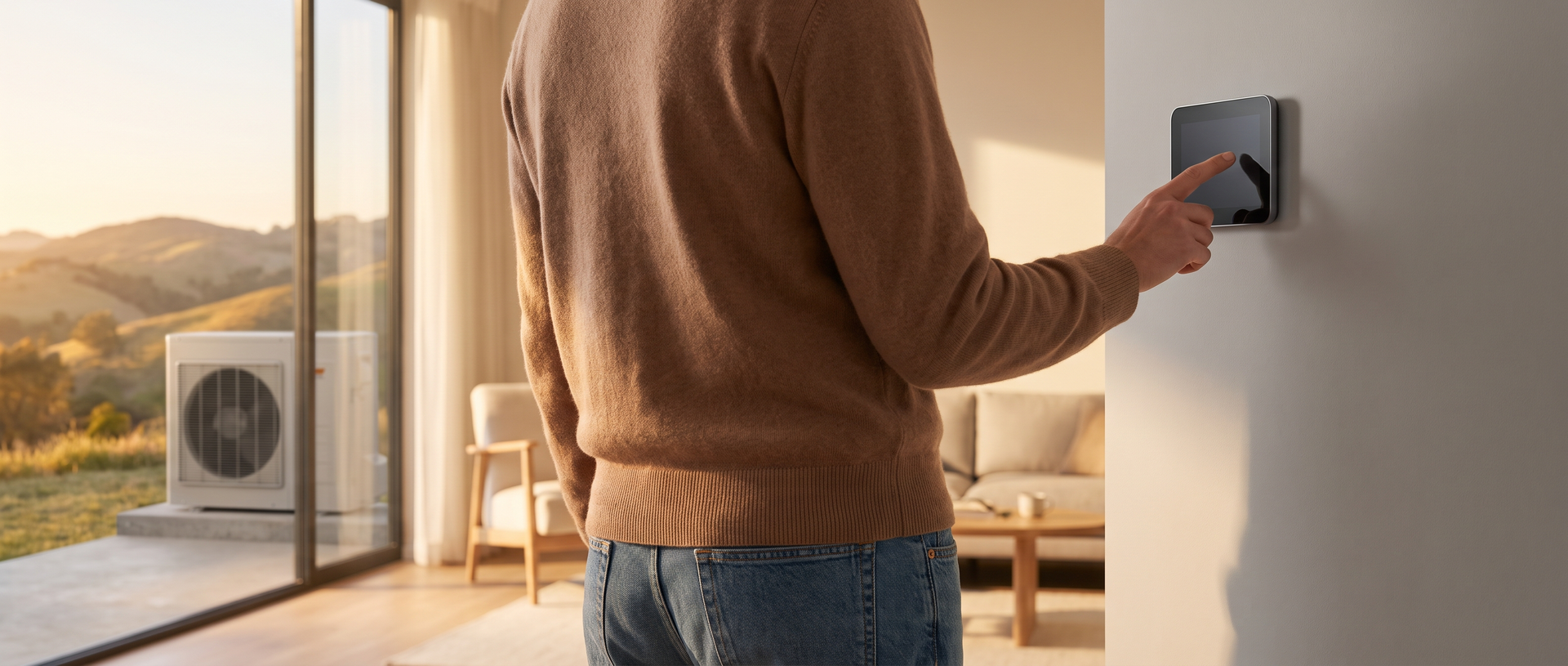
Honestly, that alone isn't alarming. Heat pump air often feels cooler at the vent than furnace air, even while it warms the house properly. The better test is whether your rooms reach the temperature you set within a reasonable time.
Before calling anyone, a few safe checks can rule out simple causes:
- Confirm the thermostat is set to Heat, with a setpoint above the current room temperature.
- Check the air filter and replace it if it looks dirty; a clogged filter restricts airflow.
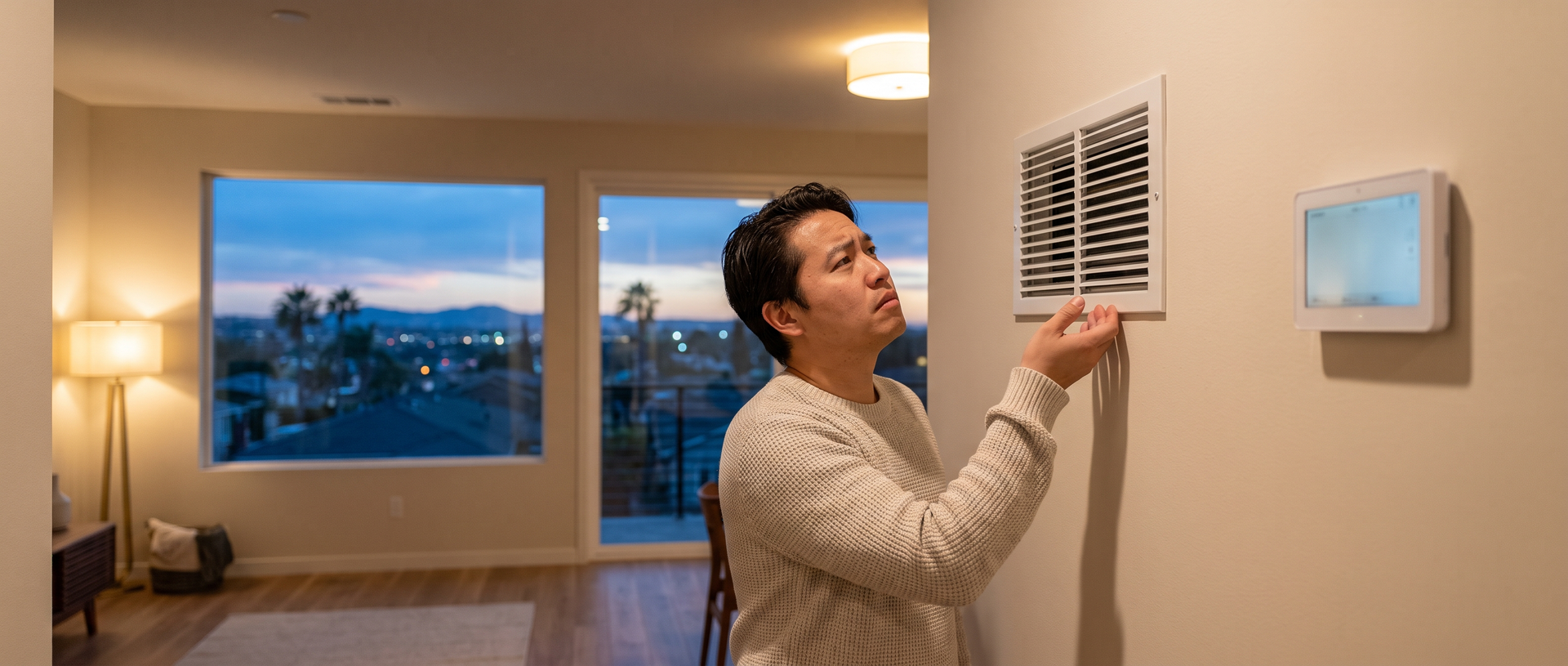
- Make sure supply and return vents are open and not blocked by furniture, rugs, or curtains.
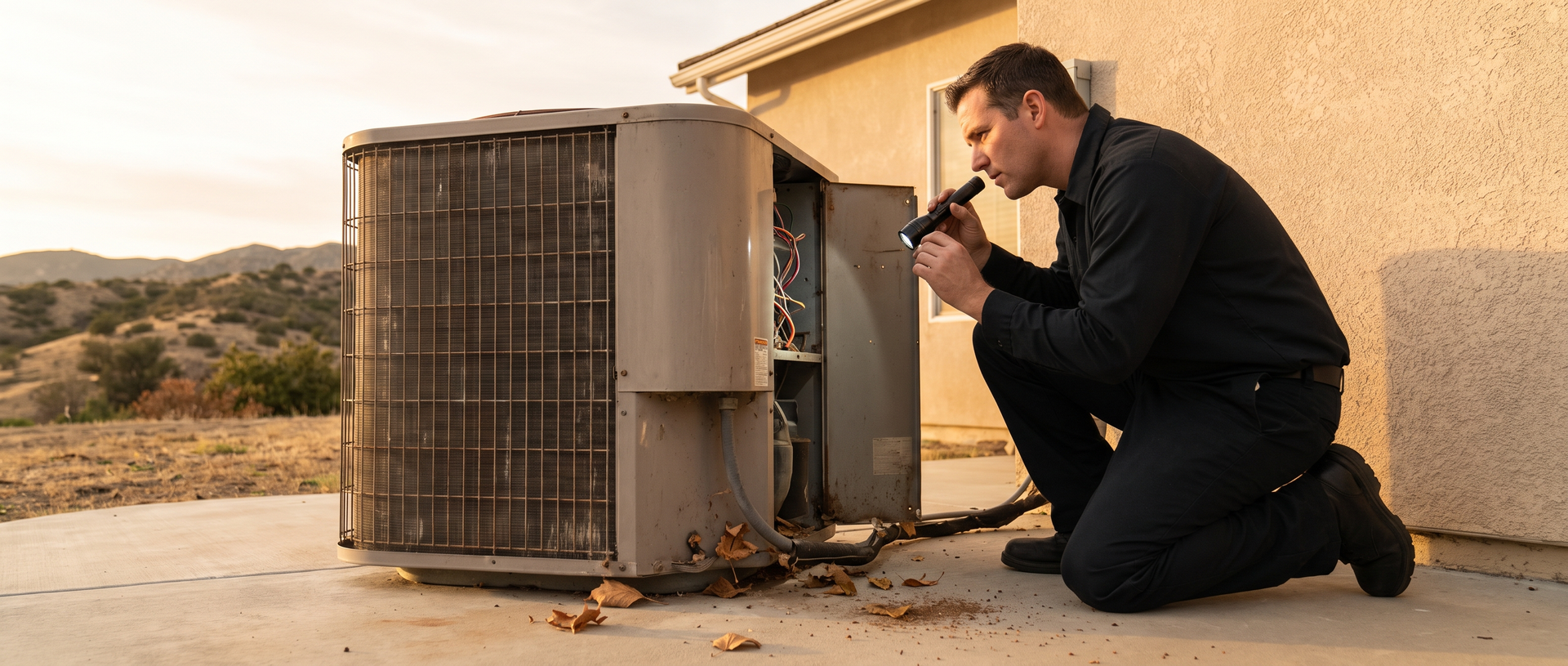
- Clear leaves, stored items, or overgrown plants away from the outdoor unit.
Salt air is the local wildcard. Over time, it can wear on outdoor coils, fins, and connections, which is why coastal systems benefit from regular inspection.
Leave the technical parts to a pro. Refrigerant, electrical components, reversing valves, and control boards should only be handled by a qualified HVAC technician. These parts involve high voltage and regulated refrigerants, and guesswork can turn a simple fix into a bigger problem.
When Coronado Heat Pump Repair Makes Sense, and What Comes After
If those simple checks don't help, a professional inspection is the honest next step. A technician can evaluate airflow, refrigerant levels, defrost controls, ductwork condition, and thermostat compatibility before recommending anything.
Here's a realistic picture of how things often unfold after a well-done repair:
- The first week: Rooms warm more evenly, and the system stops running nonstop.
- The first winter: Foggy mornings feel predictable again, without second-guessing the thermostat.
- Year three and beyond: Routine maintenance helps catch coastal wear early and supports dependable, year-round comfort.
Sometimes the conversation turns to replacement instead. System age, repair history, comfort goals, and how well the equipment fits your home all matter. A good technician lays out both paths plainly so you can choose with confidence.
Refrigerant regulations and efficiency standards also change over time, so details for your specific equipment should always be verified. When you're ready, you can book a heat pump inspection online.
Common Questions About Coronado Heat Pump Repair
Is it normal for a heat pump to blow cooler air in heating mode than a furnace?
Yes, often. A heat pump delivers a steady stream of warm air that can feel cooler at the vent than furnace heat, even when it is working properly. In Coronado's mild winters, that gentler warmth usually still keeps rooms comfortable if the system is sized and maintained well.
Why does my heat pump cool well but not heat well?
Several issues can affect heating more noticeably than cooling, including thermostat settings, airflow restrictions, refrigerant problems, defrost control issues, or a reversing valve that is not shifting properly. Because symptoms overlap, a qualified technician should inspect the system before anyone recommends a specific repair.
Does salty coastal air affect Coronado heat pump repair needs?
It can. Salt air near the ocean can contribute to corrosion on outdoor coils, fins, and electrical connections over time. Regular maintenance visits give a technician the chance to spot early wear on Coronado systems before it turns into a heating or cooling problem.
Should I repair or replace a heat pump that heats poorly?
It depends on the system's age, condition, repair history, and how well it fits your home. A focused repair often makes sense for a newer, well-maintained unit. For older equipment with recurring problems, an honest side-by-side look at repair versus replacement helps you decide with confidence.
Feeling Warm and Confident at Home Again
Weaker heating is frustrating, but it's usually solvable once someone takes a clear look at what's happening. If your home still reaches its set temperature, a little maintenance may be all you need.
If rooms stay cold, Coronado heat pump repair from a qualified team is the practical next step toward predictable, comfortable mornings. Visit the Sunline Heating & Air homepage to explore more, or reach out to our team with any questions about your system.
Ready for Steady, Comfortable Heat?
Talk with Sunline Heating & Air about dependable heat pump service for your home anywhere in San Diego County, from Coronado to North County.